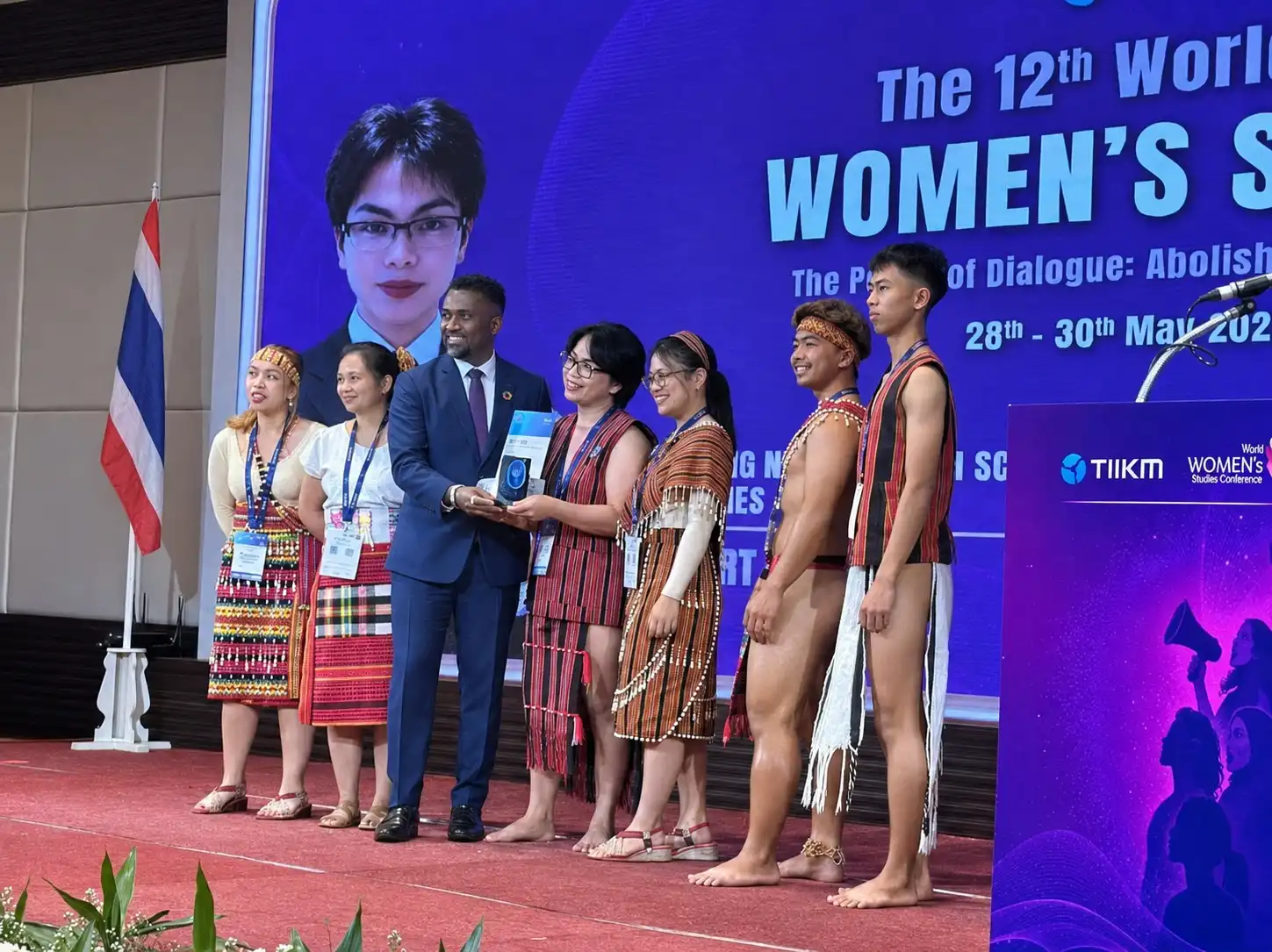
Before five senior high school students from our rural public school stood before international researchers in Chiang Mai, Thailand, we had another challenge to overcome: finding enough resources to bring them there.
Our participation in the 12th World Conference on Women’s Studies (WCWS 2026), held on May 28–30, 2026, required close to half a million pesos. We sought assistance through approximately 40 requests and received support from around 80 donors. Our preparation involved 12 sessions and 10 rehearsals, alongside the paperwork, travel arrangements, and supervision required when bringing young researchers abroad.
These figures represent months of collective effort. Parents entrusted their children to us. Donors contributed what they were willing and able to give. Our learners continued preparing their research presentations despite the uncertainty surrounding our participation.
I remember the preparation as part of the conference experience itself. Before we discussed women’s participation and social justice on an international platform, our small school community had already demonstrated the importance of collective responsibility.
We were coming from Guinaoang National High School in Mankayan, Benguet, a rural school in the Philippine Cordillera. Our delegation consisted of five senior high school researchers and their teacher-research adviser.
We carried four studies examining women’s experiences in communities often absent from major international academic discussions.
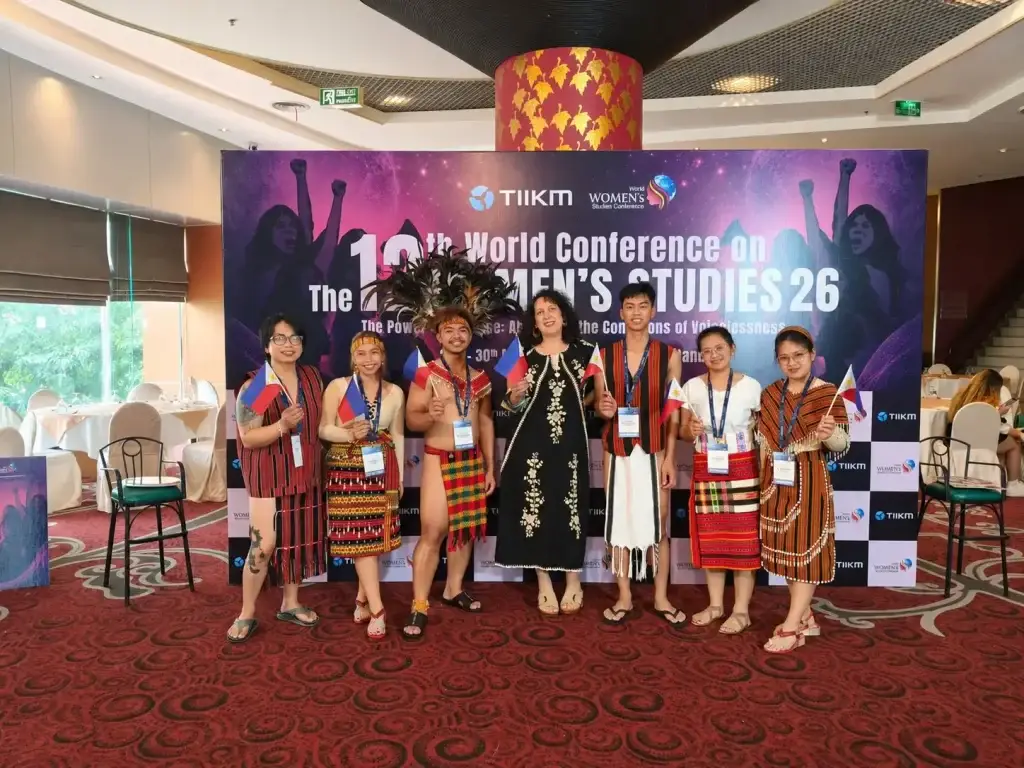
The WCWS 2026 theme, “The Power of Dialogue: Abolishing the Conditions of Voicelessness,” resonated with the research we brought to Thailand.
Our studies examined women vegetable farmers, women miners, Filipino migrant mothers, and women’s participation in Indigenous communal practices.
In Breaking Silence: Voice, Agency, and Lived Experiences of Women Vegetable Farmers in Rural Philippines, I examined the experiences of women whose agricultural work contributes to household survival and community livelihoods.
Our student researchers also explored women’s knowledge and participation in mining through Gendered Knowledge in Usalan Work: An Ethnography of Women Miners. The study brought attention to women working in a livelihood commonly associated with men.
Another study, Women’s Voices in Binnadang, examined women’s participation in Indigenous communal cooperation and dialogue. As a Kankanaey educator, I consider documenting these practices important because cultural knowledge deserves serious scholarly attention, including questions about whose experiences receive recognition.
Our fourth study, Voices Across Distance: Dialogues of Migrant Mothers Navigating Transnational Parenthood in Hong Kong, explored how Filipino mothers experience parenthood while working overseas.
This last study held personal significance for me.
My own mother spent many years working in Hong Kong, while my grandparents helped raise my sister and me. I knew from childhood how geographical distance shapes family relationships. Listening to the experiences of migrant mothers through research gave me another opportunity to examine questions of care, responsibility, separation, and sacrifice.
These four studies addressed different circumstances. Each encouraged us to listen more carefully to women’s experiences and examine the social conditions surrounding their work, relationships, and participation in community life.
My greatest responsibility at WCWS 2026 was not limited to presenting my own research. I was also accompanying five young people whose academic experiences had largely taken place within the environment of a rural Philippine public school.
Jayme Lance P. Casionan, Xyra Jane A. Salio-an, Hans Christian S. Soriano, Changmae M. Atngag, and Jan Jezhiah D. Calixto represented Guinaoang National High School.
We had spent considerable time preparing their manuscripts, presentations, and responses to possible questions. I wanted them to understand their research well enough to explain their decisions and acknowledge limitations without losing confidence.
Their studies were grounded in communities familiar to them. Yet presenting these studies internationally demanded a different level of preparation.
During the conference, they experienced the expectations of an academic gathering involving researchers from different countries and disciplines. They presented their work, engaged with scholarly discussions, and represented their school beyond the Philippines.
I was especially pleased to see their presentations appreciated by an international audience.
For me, their participation challenged the assumption that meaningful research belongs primarily to universities and established scholars. These students were still completing senior high school. They had already learned to examine social issues systematically, collect and interpret evidence, and communicate their findings to audiences beyond their immediate community.
Their achievement also reminded me of the responsibility educators carry in creating opportunities for learners whose educational circumstances differ considerably from those in more financially advantaged institutions.
Presenting at WCWS 2026 was professionally rewarding. Our delegation interacted with an international academic community, encountered different research perspectives, and received feedback on our presentations.
One recommendation from a conference panel involved considering Berger and Luckmann’s work on the social construction of reality as a theoretical framework.
I appreciated the recommendation because scholarly exchange should encourage researchers to revisit their assumptions, reconsider theoretical choices, and improve the interpretation of their findings.
My presentation also received the Overall Best Presenter Award.
I value this recognition, especially considering the work required to bring our research and delegation to Chiang Mai. Yet I regard the experience of our student researchers and the international exposure of our community-based studies as equally meaningful accomplishments.
Our presence also carried cultural significance. Through our Cordilleran identity and research subjects, we contributed perspectives rooted in Indigenous communities and rural Philippine experiences.
International scholarship benefits from examining how gender, culture, economic conditions, and community relationships shape women’s experiences in different settings. These discussions become more grounded when researchers bring evidence from communities often underrepresented in academic conversations.
The conference reinforced my commitment to producing research connected to the people and places from which our questions emerge.
Our responsibility did not end when the conference concluded.
The knowledge and experiences we gained were shared with colleagues, learners, parents, and community stakeholders. These experiences also informed subsequent classroom discussions, research mentoring, and conversations about education and social issues.
As a public school teacher, I consider this an essential part of international academic participation. Conference opportunities require resources and institutional support. The knowledge gained should contribute to professional practice and community learning.
My experience also encouraged me to continue supporting student research on issues affecting rural and Indigenous communities. Young researchers deserve opportunities to participate in serious academic conversations, provided they receive appropriate guidance and support.
Through our engagement with the World Conference on Women’s Studies 2027 (WCWS 2027), I hope to encourage more educators and emerging scholars to contribute research grounded in their communities.
Women’s studies, gender justice, and social equality are international concerns, but the evidence informing these discussions often begins with local experiences.
For our delegation, those experiences came from vegetable farms, mining communities, Indigenous practices of cooperation, and families separated by overseas employment.
When I think about Chiang Mai, I remember the award, the presentations, and the academic exchanges. I also remember the months of preparation, the people who supported us, and the five students who worked to earn their place in an international research gathering.
The journey affirmed something I continue to believe as an educator: where researchers come from should never determine whether their work deserves to be heard.
And when we speak about giving women a voice, our responsibility begins with listening carefully to what they have already been telling us.
Wilbert B. Wanas is a Master Teacher I, department head, and researcher at Guinaoang National High School in Mankayan, Benguet, Philippines. An Indigenous Kankanaey educator, his research interests include women’s experiences, Indigenous knowledge, gendered labor, rural education, and social justice. He received the Overall Best Presenter Award at WCWS 2026 in Chiang Mai, Thailand, and serves as the WCWS 2027 Partner School Coordinator for Guinaoang National High School.